
FMCSA Revokes Safe ELD and MYLOGS ELD: What Trucking Companies Need to Do Before the Deadline
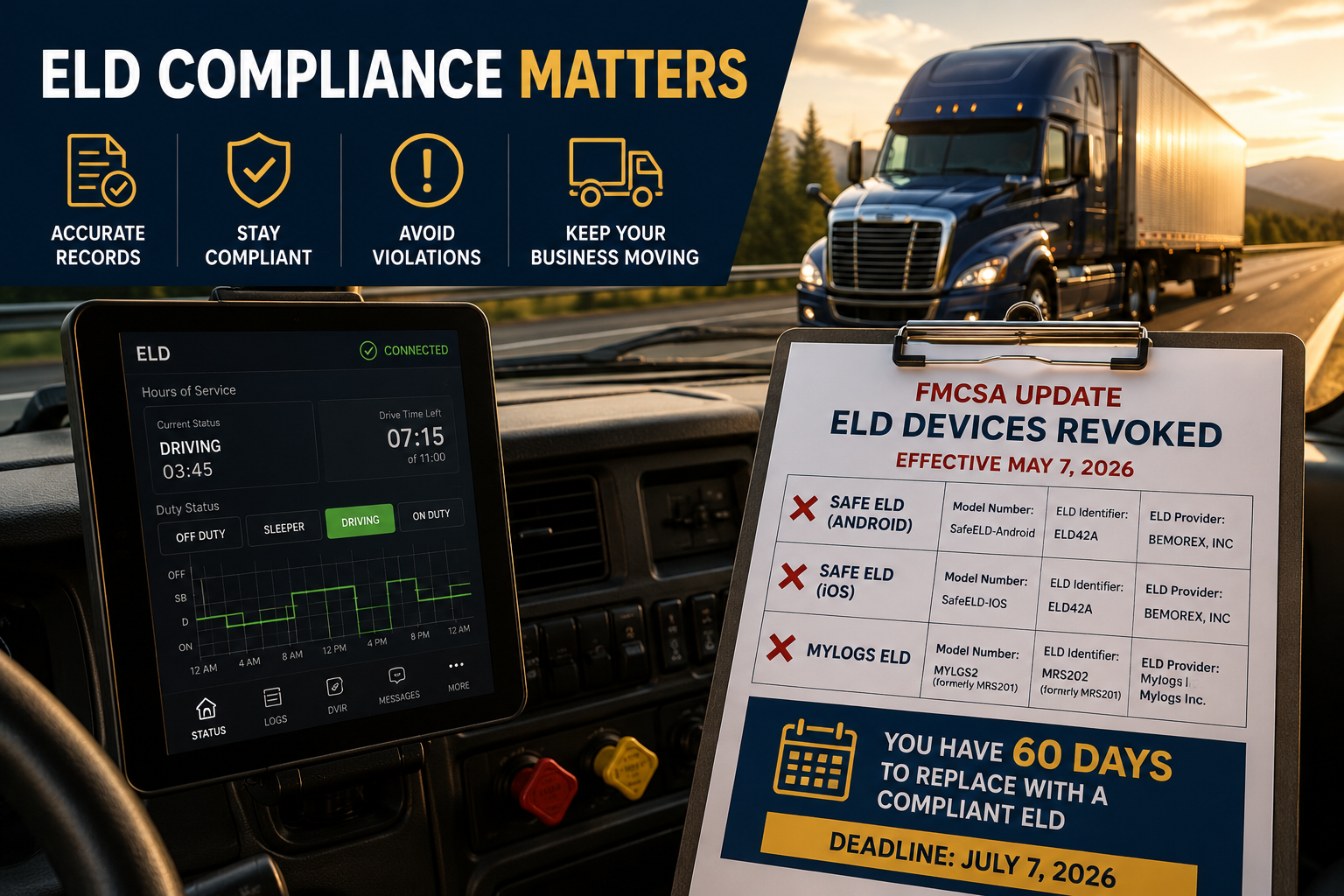
The Federal Motor Carrier Safety Administration (FMCSA) has officially removed several Electronic Logging Devices (ELDs) from its list of registered and compliant systems, creating a major compliance issue for trucking companies currently using them.
Motor carriers and drivers operating with the affected ELDs now have 60 days to replace the devices with compliant alternatives before enforcement action begins. Until then, drivers must switch to paper logs or approved logging software to remain compliant with federal hours-of-service regulations.
For trucking companies already dealing with rising costs and increased enforcement pressure, this serves as another reminder that compliance failures — even those tied to third-party technology providers — can quickly create operational risk.
Which ELDs Did FMCSA Revoke?
FMCSA removed the following ELDs from its registered device list on May 7, 2026 after determining the providers failed to meet the minimum requirements established under federal regulations.
Safe ELD (Android)
Model Number: SafeELD-Android
ELD Identifier: ELD42A
ELD Provider: BEMOREX, INC
Safe ELD (iOS)
Model Number: SafeELD-IOS
ELD Identifier: ELD42A
ELD Provider: BEMOREX, INC
MYLOGS ELD
Model Number: MYLGS2 (formerly MRS201)
ELD Identifier: MRS202 (formerly MRS201)
ELD Provider: Mylogs Inc.
These devices now appear on FMCSA’s revoked devices list, meaning they are no longer considered compliant for required hours-of-service recordkeeping.
What Should Trucking Companies Do Right Now?
Carriers currently using any of the revoked ELDs should begin replacing them immediately with a compliant system listed on FMCSA’s registered devices list. FMCSA has stated that carriers have until July 7, 2026 to complete the transition.
Until a replacement ELD is installed, drivers are expected to maintain records of duty status using paper logs or approved logging software.
How trucking companies can avoid compliance problems:
Do not wait until the final deadline to make the switch. Early action gives fleets time to install new systems, train drivers, and address technical issues before enforcement begins.
For larger fleets, delaying the transition could create operational bottlenecks and increase the risk of noncompliance across multiple trucks.
What Happens if Drivers Continue Using Revoked ELDs?
Drivers and motor carriers that continue operating with revoked ELDs after July 7, 2026 may be cited for failing to maintain proper records of duty status under federal regulations.
FMCSA also confirmed that drivers using revoked devices after the deadline may be placed out of service during inspections in accordance with Commercial Vehicle Safety Alliance enforcement criteria.
For trucking companies, out-of-service violations can lead to missed deliveries, downtime, compliance penalties, and increased liability exposure — all of which can impact profitability and customer relationships.
Why Is ELD Compliance So Important in 2026?
ELD compliance remains one of the most heavily enforced areas in trucking. Regulators continue focusing on accurate hours-of-service reporting, driver accountability, and operational safety, especially as enforcement technology becomes more advanced.
Even when compliance issues originate from software providers, trucking companies are still responsible for ensuring the systems they use remain federally compliant.
How trucking companies can reduce risk:
Review ELD systems regularly and stay updated on FMCSA announcements involving revoked or approved devices. Compliance should be treated as an ongoing operational priority rather than a one-time setup.
Can ELD Violations Affect Trucking Insurance?
Yes. Compliance violations tied to ELD usage can negatively impact CSA scores, safety ratings, and a fleet’s overall risk profile. Those factors may also influence trucking insurance underwriting decisions and premium costs over time.
Insurance providers are paying closer attention to compliance history across the industry as claim severity and operational risk continue to rise. Fleets with strong compliance practices are generally viewed as lower-risk operations.
How trucking companies can protect themselves:
Build compliance into your broader risk management strategy by maintaining approved systems, documenting procedures properly, and resolving issues quickly when they occur.
Final Thoughts
FMCSA’s decision to revoke Safe ELD and MYLOGS ELD highlights how quickly compliance requirements can shift within the trucking industry. While the affected devices may have previously been approved, carriers are still responsible for making sure the systems they rely on remain compliant with current federal standards.
For trucking companies, staying protected means more than keeping trucks moving. It means staying ahead of compliance risks before they turn into violations, downtime, or larger operational problems.
At Allcom Insurance, we work with trucking companies every day to help identify risks early and make sure operations are properly protected. From compliance-related exposures to trucking insurance coverage and operational risk management, having the right strategy in place helps keep your business moving forward.
Call 866-277-9049 or email info@allcomins.com to make sure your operation is backed by The Allcom Shield.