
What the 2027 EPA NOx Rule Means for Trucking Companies and Fleet Planning
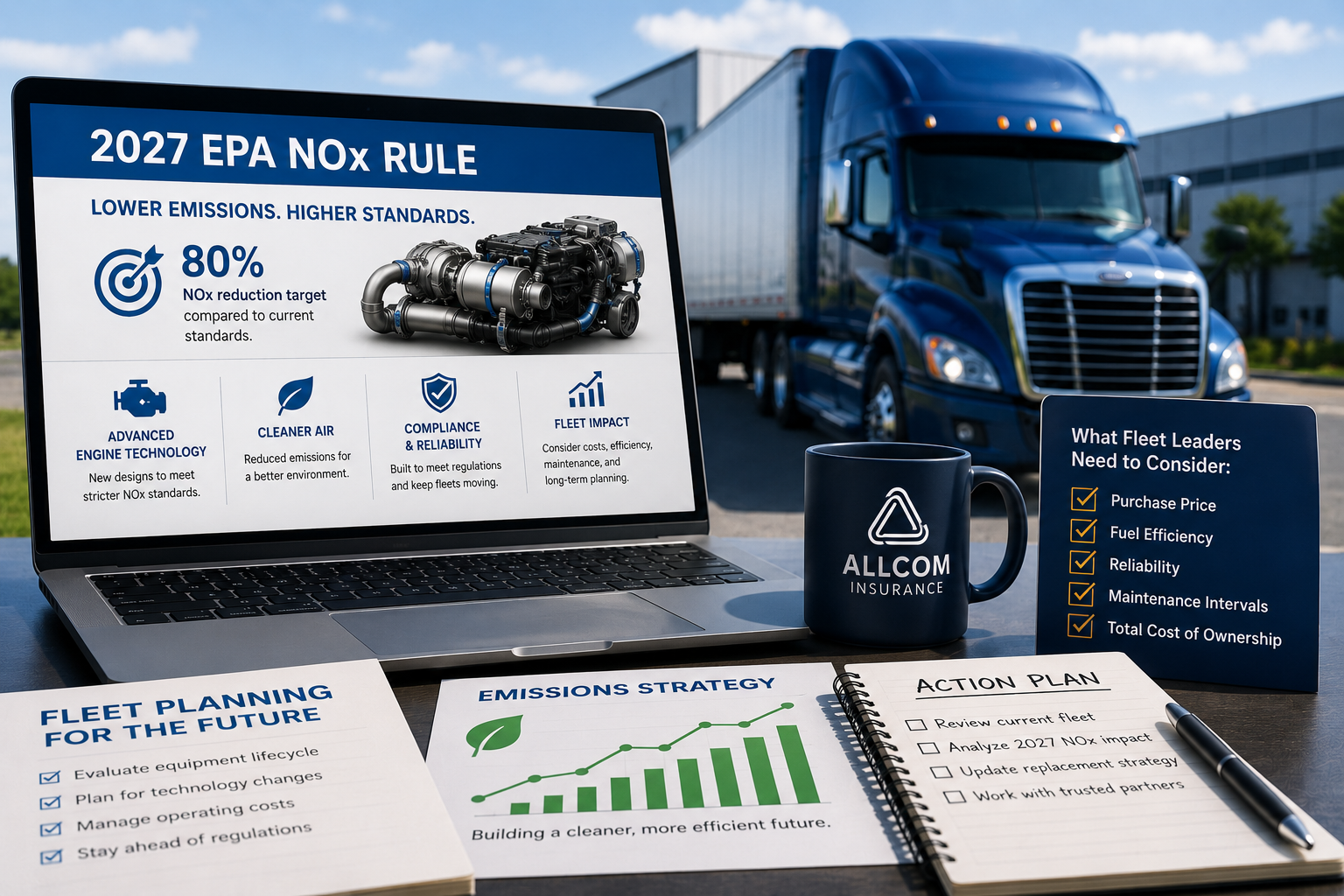
The trucking industry is once again preparing for major emissions-related changes as the EPA’s new low-NOx standards move closer to taking effect for model year 2027 heavy-duty engines.
While federal greenhouse gas regulations have recently shifted, the upcoming NOx requirements remain firmly in place. For fleet owners, carriers, and owner-operators, the rule is expected to impact everything from truck pricing and maintenance costs to reliability, fuel efficiency, and long-term equipment planning.
As manufacturers work to meet dramatically stricter standards, many trucking companies are now asking the same question: how will the 2027 EPA NOx rule affect day-to-day operations and future fleet decisions?
What Is the 2027 EPA NOx Rule?
The EPA’s 2027 NOx emissions rule is designed to significantly reduce nitrogen oxide emissions from heavy-duty diesel engines.
Under the updated standards, engine manufacturers are facing an approximately 80% reduction target compared to current emission limits. The goal is to lower air pollution tied to commercial vehicle operations, particularly in urban and high-traffic areas.
For OEMs, this means redesigning engine systems and integrating additional emissions-control technologies capable of meeting the stricter requirements.
For trucking companies, it means preparing for another major shift in equipment performance, operational costs, and maintenance expectations.
Why Are Trucking Companies Concerned About the New NOx Standards?
Many fleets still remember the challenges that came with previous emissions rollouts involving EGR systems, DPF filters, and DEF technology.
Whenever new emissions systems are introduced, carriers often worry about:
Increased truck purchase prices
Reduced reliability
More downtime
Higher maintenance costs
Lower fuel economy
More complicated repairs
The 2027 NOx standards are generating similar concerns because manufacturers will need to achieve much lower emissions levels while still maintaining performance and durability expectations for commercial fleets.
How Will the 2027 NOx Rule Affect New Trucks?
Industry experts expect new heavy-duty trucks built under the 2027 standards to include more advanced emissions-control systems and updated engine technology.
That could potentially impact:
Upfront equipment pricing
Maintenance intervals
Regeneration cycles
Fuel consumption
Warranty structures
Repair complexity
Manufacturers are currently working to balance emissions compliance with operational efficiency, but many fleet leaders are already preparing for higher acquisition costs tied to next-generation equipment.
How trucking companies can prepare:
Start reviewing long-term equipment replacement strategies now instead of waiting until 2027 arrives. Planning ahead can help fleets avoid rushed purchasing decisions later.
Will the New EPA Rule Impact Fuel Efficiency?
Fuel efficiency remains one of the biggest questions surrounding the new standards.
Historically, tighter emissions requirements have sometimes created trade-offs between emissions reductions and fuel economy. OEMs are now working to minimize those impacts through updated engine calibrations, improved aftertreatment systems, and advanced powertrain technology.
However, many fleets are still cautiously watching how real-world performance compares once 2027-compliant trucks begin operating at scale.
For trucking companies operating on tight margins, even small fuel-efficiency changes can significantly impact long-term operating costs.
Could Truck Reliability and Maintenance Costs Increase?
Potentially, yes.
More advanced emissions systems often mean more sensors, more components, and more complexity overall. That can create additional maintenance demands if systems experience failures or require more frequent servicing.
At the same time, manufacturers are emphasizing durability improvements and predictive maintenance capabilities to offset those concerns.
Still, many fleet leaders are carefully evaluating whether to extend the life of existing equipment longer before transitioning fully into 2027-compliant models.
How trucking companies can reduce risk:
Monitor maintenance trends closely and work with trusted service providers that understand evolving emissions technology and compliance requirements.
Should Fleets Consider Pre-Buying Trucks Before 2027?
Some carriers are already discussing whether to accelerate equipment purchases before the new standards take effect.
Historically, major emissions changes often trigger “pre-buy” activity, where fleets purchase trucks ahead of regulatory deadlines to avoid higher costs or uncertainty tied to new technology rollouts.
However, every fleet situation is different. Financing costs, maintenance trends, fuel efficiency goals, and operational needs all play a role in determining whether pre-buying makes financial sense.
The most important factor is making a decision based on long-term operational strategy instead of reacting purely out of fear or speculation.
Why Fleet Planning Matters More Than Ever
The trucking industry is facing multiple pressures at once, including rising operational costs, regulatory uncertainty, tightening insurance markets, and changing freight conditions.
The 2027 NOx standards add another layer of complexity for fleet operators trying to balance profitability with long-term equipment planning.
Companies that begin evaluating their equipment lifecycle strategies now will likely be in a stronger position than fleets waiting until the last minute to adapt.
Final Thoughts
The 2027 EPA NOx rule is shaping up to be one of the most significant emissions-related changes the trucking industry has faced in years. While manufacturers continue working toward compliance, fleet leaders are being forced to think carefully about future truck purchases, maintenance planning, fuel costs, and operational risk.
As regulations continue evolving, preparation and long-term planning will become even more important for trucking companies trying to stay competitive and protected.
At Allcom Insurance, we work with trucking companies every day to help navigate industry changes, operational risks, and long-term fleet challenges. From trucking insurance coverage to risk management support, having the right protection in place helps keep your business moving forward no matter how the industry changes.
Call 866-277-9049 or email info@allcomins.com to make sure your operation is backed by The Allcom Shield.