
Top 10 Yoga Poses Every Truck Driver Should Do to Stay Healthy on the Road
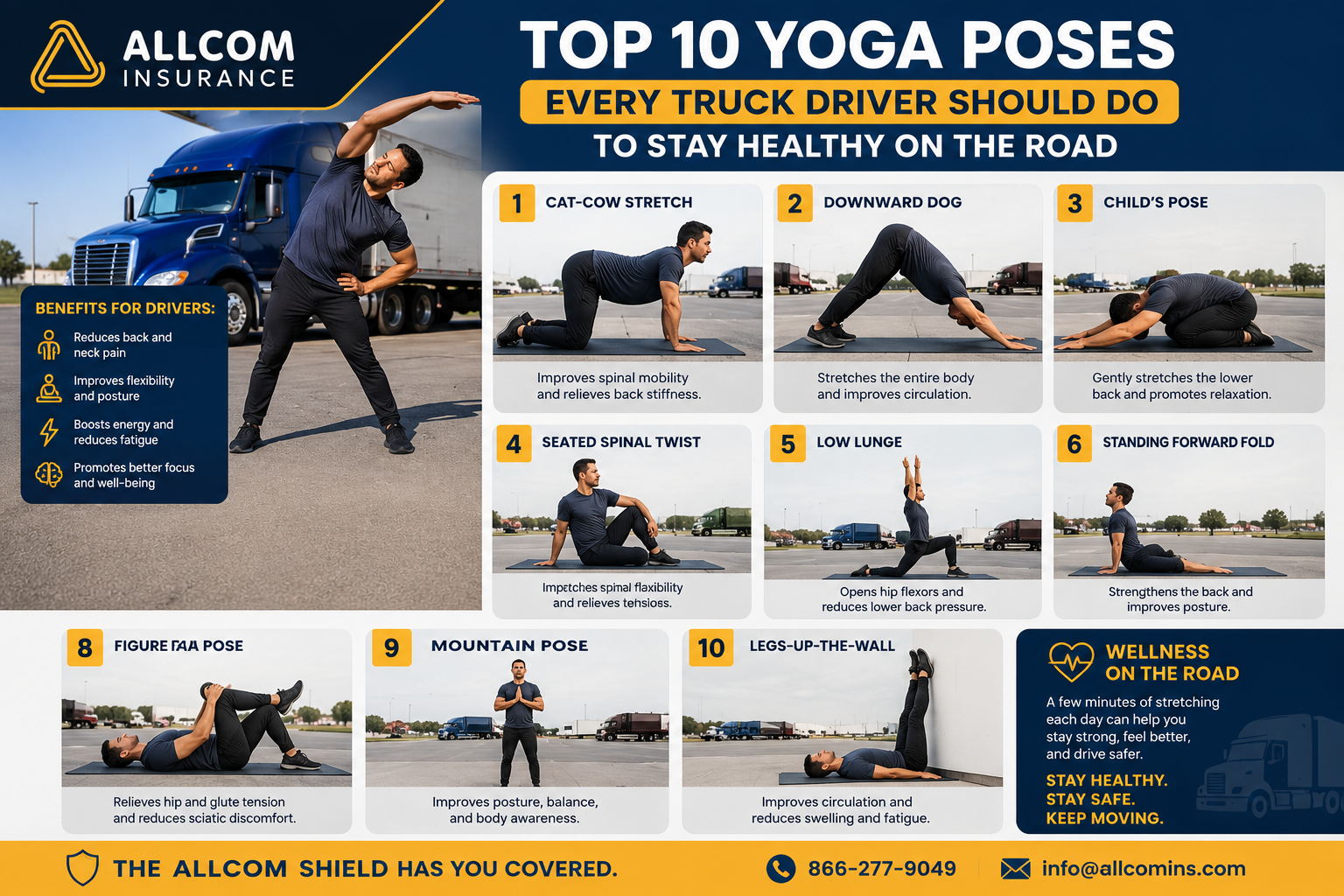
Life behind the wheel can be tough on the body. Hours of sitting, limited movement, vibration from the road, and irregular schedules can lead to stiff muscles, back pain, poor posture, and fatigue.
The good news is that you don't need a gym membership or expensive equipment to take care of your body. A few simple stretches and yoga poses can help improve flexibility, increase circulation, reduce discomfort, and even improve focus during long hauls.
Here are 10 yoga poses every truck driver should consider adding to their routine.
1. Why Should Truck Drivers Practice Cat-Cow Stretch?
The Cat-Cow Stretch helps loosen the spine, improve posture, and reduce lower back stiffness that often develops after long hours of sitting.
By gently moving between arching and rounding your back, you increase spinal mobility and improve circulation throughout the back and core muscles.
How to do it:
Alternate between arching your back upward and lowering your stomach while lifting your chest for 30-60 seconds.
2. How Can Downward Dog Help Relieve Driver Fatigue?
Downward Dog stretches the hamstrings, calves, shoulders, and back all at once.
Truck drivers often experience tightness in these areas due to prolonged sitting. This pose helps lengthen the body and improve blood flow after a long day on the road.
How to do it:
Form an upside-down V shape with your body while pressing your heels toward the ground.
3. Why Is Child's Pose Great for Truck Drivers?
Child's Pose provides a gentle stretch for the lower back, hips, and shoulders while promoting relaxation.
Many drivers use this pose after unloading cargo or spending extended hours in the driver's seat.
How to do it:
Kneel on the ground, sit back on your heels, and extend your arms forward while lowering your chest.
4. How Does the Seated Spinal Twist Improve Mobility?
Sitting for long periods can cause tight hips and limited spinal movement.
A Seated Spinal Twist helps improve flexibility in the back and core while relieving tension built up during long drives.
How to do it:
Sit upright and gently rotate your upper body to one side while keeping your hips grounded.
5. Why Should Truck Drivers Stretch Their Hip Flexors?
Tight hip flexors are one of the most common issues among professional drivers.
The Low Lunge Pose helps open the hips, improve mobility, and reduce pressure on the lower back.
How to do it:
Step one foot forward into a lunge position while lowering the opposite knee to the ground.
6. Can Forward Fold Help Reduce Back Pain?
Yes. Standing Forward Fold stretches the hamstrings, calves, and lower back while helping release tension caused by prolonged sitting.
Many drivers find this pose especially helpful during fuel stops and rest breaks.
How to do it:
Stand with feet shoulder-width apart and slowly fold forward toward your toes.
7. How Does Cobra Pose Strengthen Posture?
Poor posture is a common challenge for truck drivers.
Cobra Pose strengthens the lower back while opening the chest and shoulders, helping counteract the forward-leaning position many drivers develop over time.
How to do it:
Lie on your stomach and gently lift your chest while keeping your hips on the ground.
8. Why Is the Figure Four Stretch Important for Drivers?
Long hours in the driver's seat can create tightness in the hips and glutes.
The Figure Four Stretch targets these areas and may help relieve sciatic nerve discomfort that some drivers experience.
How to do it:
Cross one ankle over the opposite knee and gently pull the supporting leg toward your chest.
9. Can Mountain Pose Improve Balance and Posture?
Mountain Pose may look simple, but it helps improve posture, balance, and body awareness.
It encourages proper alignment and can help reduce strain on the neck, shoulders, and lower back.
How to do it:
Stand tall with feet together, shoulders relaxed, and core engaged.
10. Why Is Legs-Up-the-Wall One of the Best Recovery Poses?
After spending hours sitting behind the wheel, circulation can become sluggish.
Legs-Up-the-Wall is a restorative pose that helps improve blood flow, reduce swelling, and promote recovery after long driving days.
How to do it:
Lie on your back and extend your legs vertically against a wall for 5-10 minutes.
How Often Should Truck Drivers Stretch?
Even five to ten minutes of stretching during fuel stops, loading periods, or overnight breaks can make a significant difference.
Consistency matters more than duration. Small daily habits can help reduce stiffness, improve mobility, and lower the risk of injuries over time.
Final Thoughts
Trucking is physically demanding, even if much of the work happens behind the wheel. Taking a few minutes each day to improve flexibility and mobility can help drivers stay healthier, more comfortable, and more focused on the road.
At Allcom Insurance, we understand that protecting a trucking business goes beyond insurance coverage. Driver wellness, safety, and risk management all play a role in keeping operations running smoothly. Whether you operate a single truck or manage an entire fleet, having the right protection in place helps keep your business moving forward.
Call 866-277-9049 or email info@allcomins.com to learn how The Allcom Shield helps protect trucking companies across the country.